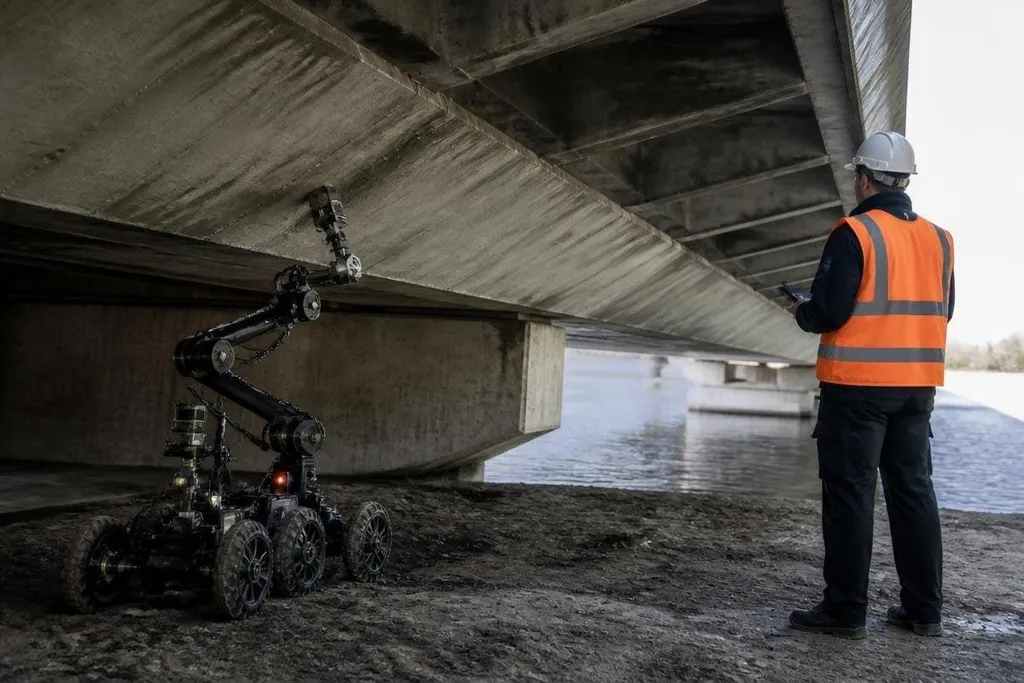
A robot inspecting a bridge, tunnel, rail line, or power site has to work around dirt, weather, poor signals, and people. That makes infrastructure maintenance a harder test than a clean factory floor, where the route and task are usually known.
The useful question is practical: can a robot collect better inspection data, reduce risky access, or keep an asset available for longer?
- Inspection first: cameras, LiDAR, and ultrasonic tools can check places that are hard or unsafe for people to reach.
- Human review stays: engineers still need to judge damage, set repair priorities, and approve work.
- The site decides: rough ground, water, dust, radio coverage, and access rules can matter more than the robot’s headline speed.
Where the robots can help
Infrastructure work starts with knowing the condition of an asset. Inspection robots can carry cameras and other sensors along a fixed route, over a structure, or inside a confined space. The useful output is a record that engineers can compare over time.
That record may show a crack getting longer, corrosion spreading across a pipe, or a component changing position. The robot does not need to make the repair decision for the inspection to have value. It needs to gather clear data from the same place and make that data easy to review.
Ground robots suit roads, rail corridors, tunnels, and plant floors. Drones can inspect towers, roofs, bridges, and other structures above ground without sending a person to every point. Underwater robots can check submerged surfaces where visibility, depth, or water flow limits human access.
Each type has a narrow working range. A drone may cover a large area but struggle with wind and battery limits. A ground robot may carry more equipment but stop at stairs, loose gravel, standing water, or a locked gate.
The hard part is the site
A maintenance robot has to locate itself, avoid obstacles, collect useful data, and return safely. That sounds manageable in a plan. It becomes harder when dust blocks a sensor, a metal surface interferes with positioning, or a route changes after construction work.
Many systems use cameras, LiDAR, GPS, or a mix of sensors. LiDAR measures distance with laser pulses, while cameras record visual detail. The choice affects what the robot can see and how well it can move when light, weather, or signal quality changes.
Communication also matters. When the system sends large inspection files, it needs enough network bandwidth, or it must store data onboard until it reaches a connection. A site manager may need a manual control link, an emergency stop, and a clear plan for recovering a robot that loses power.
Safety rules add another layer. Public roads, rail sites, utility facilities, and construction zones have different access controls. A machine that works well in a closed yard may need a different operating plan near traffic or live equipment.
Data has to reach an engineer
The robot’s camera feed is only the start.
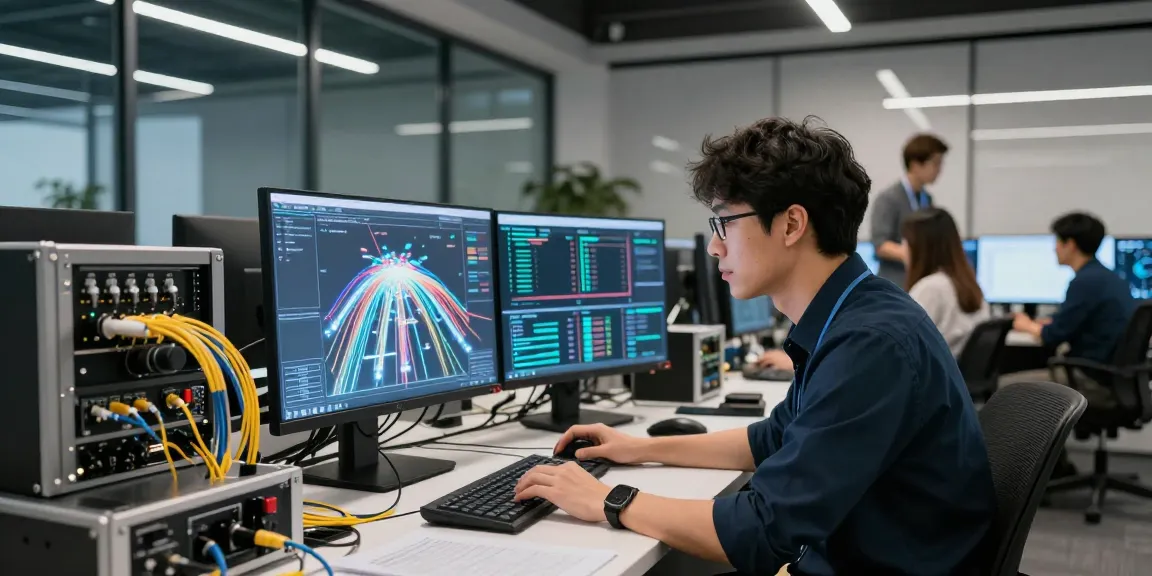
Maintenance teams need location data, timestamps, sensor settings, and a way to compare new findings with older records. Without that structure, the inspection can create more files without making repair work easier.
This is where automation software matters. It can mark areas for review, sort images by location, and send uncertain findings to a person. The software should show why an item was flagged, so an engineer can check the original image or sensor reading.
For infrastructure teams, Robot24 can put an inspection robot’s task, route, sensors, and test setting beside the claim, giving you facts to compare before treating a demo as proof.
The open issue is proof in live conditions. A short demonstration can show a robot crossing a surface or identifying a defect. It does not show how the system performs after repeated runs, weather changes, blocked routes, sensor damage, or a missed connection.
What buyers should ask first
The right purchase starts with the maintenance task, not the robot shape. A site team should define the asset, the inspection point, the sensor data needed, and the action that follows a finding.
Use this checklist before a pilot:
- Name the route: record stairs, slopes, water, loose material, gates, narrow spaces, and areas without a network signal.
- Set the evidence standard: decide what image quality, location accuracy, and repeatability an engineer needs.
- Plan human control: specify who can stop the robot, take over, recover it, and approve a return to service.
- Measure the full task: count setup, travel, data transfer, review, cleaning, charging, and repairs caused by the robot itself.
- Test failure recovery: remove the network link, block the route, lower visibility, and check how the robot reports the problem.
A pilot should compare the robot with the current inspection method, using the same route and acceptance rules. Measure usable inspection records, missed areas, staff time, and repairs caused by the robot itself.
I’d skip any system that cannot show how it handles a lost connection or an incomplete inspection.
Infrastructure maintenance robots will find lasting work when they fit the site, record evidence engineers can use, and fail in ways people can manage. The next proof is not a smoother demonstration. It is a repeatable inspection that survives the conditions the asset sees every day.